August 21, 201213 yr In my example V1 and Vr are effectively the same just a fewk knots apart. With the a/c in question a SVC10 at 65% AUW it still can get off the ground after 2,700ft at that altitude. At an airport close to sea level like LHR the take-off run is below 2,500ft (for the same config) so one would be able to justify a stop there a second or so past V1 but no more! I don't think you get what V1 means. I thought you said you used to fly for BA. The very basic definition: V1—Critical engine failure speed or decisionspeed. Engine failure below this speed should result in an aborted takeoff; above this speed the takeoff run should be continued. Chris Miller
August 21, 201213 yr Found it, wasn't the EIN one after all, (we can keep that one buried in the depths), but here we go. You should really give this a read Mr. Liberista... http://forum.avsim.net/topic/353882-two-questions-about-real-world-ops/ Regards, Ró. Rónán O Cadhain.
August 21, 201213 yr More basics from the FAA: PRE-TAKEOFF PROCEDURESTakeoff data, including V1/VR and V2 speeds, takeoff power settings, and required field length should be computed prior to each takeoff and recorded on a takeoff data card. These data will be based on airplane weight, runway length available, runway gradient, field temperature, field barometric pressure, wind, icing conditions, and runway condition. Both pilots should separately compute the takeoff data and cross-check in the cockpit with the takeoff data card. These are all from the airplane flying handbook. Chris Miller
August 21, 201213 yr ....so one would be able to justify a stop there a second or so past V1 but no more! Wow. How long exactly is an "or so" defined in your airline's operating manual? No. The only justification for aborting is that an aircraft cannot fly. These days, most airlines train to only abort for power loss, fire or flight control failure between 80kts and V1. Any other malfunction is not enough to justify an abort above 80kts. It is much more dangerous to try to stop an aircraft from high speed with not much runway left, than it is to takeoff with the malfunction and come back around to land.
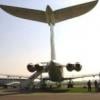
August 21, 201213 yr Author Seriously, the story about the takeoff abort after rotation due to a blown tire? 43 people died. The plane went off the end of the runway and down a slope. Huh? That's your case for not taking off? That is a case of seriously bad airmanship, of making things up as you go, of not doing as you're trained, and causing unnecessary deaths. A blown tire is one of the worst reasons for aborting. With a blown tire, your stopping abilities are reduced substantially, meaning you may not be able to stop within your calculated accelerate stop distances that you used as a basis for your takeoff performance conisderations. In fact, learning from incidents like the one you just linked to, the preferred action after a blown tire is to continue the takeoff and just come back in and land normally. A lot less drama and a lot safer. The 4/18/72 incident you read showed poor airmanship since that crew aborted a takeoff after V1 with an aircraft that had impaired stopping abilities. Really? That is what we call a double whammie. Two things against them which work together to exponentially make the situation worse. Aborting after V1 in a plane that can't stop. If all they did was continue the takeoff and come back around for a landing, then they would have had a lot more runway in front of them when they did hit the brakes and those 43 people would still be alive today. Vololiberista, you totally misread that article. I didn't misread the article at all! In fact if you read they aborted just as the noise wheel was lifting off (definately a bad move!). Especially at Addis even in a VC10 and having already used about half the rwy it being so high even the stopping distances are increased! I did have a copy of the full report and it was thought that had the brake been ok an accident would have been avoided (just). Don't forget that at high altitude airports one's ground speed is much higher so they could have come a cropper on landing if they had taken off. Super VC10 into LOWI with PF3 at a cinema near you https://www.youtube.com/watch?v=298UDyNmgUA
August 21, 201213 yr Don't forget that at high altitude airports one's ground speed is much higher so they could have come a cropper on landing if they had taken off. WHAT?!?!? :blink: Yes the Airport was hot and high, but god almighty there was absolutely no, none, nada, nil reason at all to reject in this case. What in the blazes is going on here? Are you having us on like? Rónán O Cadhain.
August 21, 201213 yr Author Everyone knows and should know that at V1 the decision is made to take-off in an emergency. However, if something happens exactly at that point AND your stopping distance available far exceeds that needed then you have a case for stopping and not taking off provided that your weight is relatively low. Super VC10 into LOWI with PF3 at a cinema near you https://www.youtube.com/watch?v=298UDyNmgUA
August 21, 201213 yr I didn't misread the article at all! In fact if you read they aborted just as the noise wheel was lifting off (definately a bad move!). Especially at Addis even in a VC10 and having already used about half the rwy it being so high even the stopping distances are increased! I did have a copy of the full report and it was thought that had the brake been ok an accident would have been avoided (just). Don't forget that at high altitude airports one's ground speed is much higher so they could have come a cropper on landing if they had taken off. Ok, I could have sworn in your post where you linked to that article, you said "The case for not taking off." Or have I gone completely mad? Well, when you blow your tire, your brakes will not be OK. That is because you've lost a wheel, and the remaining wheels and brakes have to work harder to get you stopped. So there should have been no assumption of even a possibility that their brakes should have been OK. But you see, this accident back in 1978 was one of those learning experiences that we learned from to know that in the case of a blown tire, it is usually better to continue the takeoff. The high DA affects both decisions the same. They would have aborted their takeoff from a high velocity as well. And if they had taken off, they would have had the option to go somewhere with longer runways and lower field elevation, and also burn up some gas so that they can come in at a lighter weight and slower speed. Everyone knows and should know that at V1 the decision is made to take-off in an emergency. However, if something happens exactly at that point AND your stopping distance available far exceeds that needed then you have a case for stopping and not taking off provided that your weight is relatively low. No. I've already outlined the reasons.
August 21, 201213 yr Everyone knows and should know that at V1 the decision is made to take-off in an emergency. However, if something happens exactly at that point AND your stopping distance available far exceeds that needed then you have a case for stopping and not taking off provided that your weight is relatively low. No. Edit: Beaten to it. Edited August 21, 201213 yr by Rónán O Cadhain Rónán O Cadhain.
August 21, 201213 yr Author WHAT?!?!? :blink: Yes the Airport was hot and high, but god almighty there was absolutely no, none, nada, nil reason at all to reject in this case. What in the blazes is going on here? Are you having us on like? The airport still is hot and high!! ^_^ The case for not taking-off was the pilots decision not mine at all! As said being hot and high means stopping distances are also longer. I'll have to dig out the report later. It has the a/c weight and speeds whichwould tell just how much rwy they used to get to V1 Super VC10 into LOWI with PF3 at a cinema near you https://www.youtube.com/watch?v=298UDyNmgUA
August 21, 201213 yr Um, surely it isn't V1 if " your stopping distance available far exceeds that needed" ? Not a pilot, genuine question...
August 21, 201213 yr The airport still is hot and high!! ^_^ The case for not taking-off was the pilots decision not mine at all! As said being hot and high means stopping distances are also longer. I'll have to dig out the report later. It has the a/c weight and speeds whichwould tell just how much rwy they used to get to V1 The hot and high is factored into the maximum allowable takeoff weight. Therefore, it is not a consideration anymore as you are thundering down the runway. You've considered it already.
August 21, 201213 yr The airport still is hot and high!! ^_^ Hold for an hour or two, then land. You'll have all the runway, and most likely a similar speed if not a lower speed than your V1. Heck continuing the flight to LHR probably would have been safer. I'm really starting to doubt that you were a real VC10 pilot at the minute... Rónán O Cadhain.
August 21, 201213 yr The airport still is hot and high!! ^_^ The case for not taking-off was the pilots decision not mine at all! As said being hot and high means stopping distances are also longer. I'll have to dig out the report later. It has the a/c weight and speeds whichwould tell just how much rwy they used to get to V1 It doesn't matter if it is a million degrees and in space, we have calculations that take into account temperature, wind, runway conditions, MEL'd items and weight. From there it gives us the maximum takeoff weight we can fly with and that then shows us what the V1, Vr, V2, and flap retraction speeds will be. Chris Miller
August 21, 201213 yr Author Let's look at it this way. Change the location to Heathrow. The VC10 (at medium weight) will accelerate to V1 in under 2,000ft. I'm not talkng about engine fires after V1 (though at that weight Vr would be called almost immediately). So, he fire bells come on at V1 I have not yet lifted the nose wheel I still have almost 10,000ft to stop the a/c The starting point of the thread is a rwy of 6,700ft. Technically speaking you could stop the a/c but would be safer to take-off. And safer still to land away as 6,700ft would also be too short with a two engine landing. Super VC10 into LOWI with PF3 at a cinema near you https://www.youtube.com/watch?v=298UDyNmgUA


Create an account or sign in to comment