August 23, 201213 yr This report may be of interest to some: http://www.iata.org/iata/RERR-toolkit/assets/Content/Contributing%20Reports/NLR_Rejected_takeoff_after_V1.pdf John-Alan Pascoe
August 24, 201213 yr Here's the rub! It's called knowing your a/c and conditions. I can transpose the specs at the beginning of the thread to Heathrow, take the a/c to Vr and still have almost half the rwy in front of me at full stop. Some of the "other" so-called pilots here seem to think that the a/c they fly are the only a/c that fly! They forgot (or didn't read carefully enough) that the example given is of a high performance a/c that would be hundreds of feet in the air by the time it passes the old Heathrow control tower. With regard to emergencies sometimes pilots have to think outside the box and make a decision between a rock and a hard place. A question asked earlier about whether it is possible for V1 to be higher than Vr is also true as it can be so in terms of the basic calculated numbers. However the Vr would be incremented to be at least the same as V1. Too many people are too ready to criticise instead of reading more carefully what's written. (If I didn't make myself clear then I accept that. (It was 2130Z here and still 30c!)) They are also too ready to criticise other crew involved in an accident (referring to that of 5X UVA at Addis) who did actually make the right decision. Yes they could have taken-off. But, what would have been the outcome of the landing with burst tyres and the unknown factor of degraded brakes. We can all discuss until the cows come home the do's and don'ts of various actions. But that crew and many others had to make a decision and none of them were sitting in comfortable armchairs at the time the decision had to be made!! I would suggest that the next time company simulator time is required that said "pilots?" take the opportunity to practice on-rwy emergencies and find out just what the a/c is or is not capable of. Talking of sims as far as I'm aware (I stand corrected if wrong) in both Fs9 and FSX, I haven't yet found an a/c that uses rwy data to calculate V1. Thinking outside the box is fine if the situation warrants it. A blown tire causing you to reject a takeoff after V1 is not one of those. The philosophy and training regards to takeoff aborts that we undergo these days takes the lessons learned from crashes such as the Addis accident into account. That is why the emphasis is on knowing exactly what you would abort for, and disciplining yourself to abort only for those, because there is little room for confusion when you're at V1-Vr and the greater risk for hull loss and loss of life is with the abort. If V1 is greater than Vr, we decrement V1 to equal Vr. It makes no sense to increment Vr to V1 since the plane is already ready to fly at the lower Vr. Why extend your takeoff distance unnecessarily and use up more runway than necessary? I can already tell you what would happen if one of us decided to abort after V1 in the sim. During the last round of upgrades, we had one captain upgrade decide to abort during a V1 malfunction, after V1 and after he had pushed the thrust levers past the takeoff detents. After initially deciding to Go, he decided to NoGo and aborted. The examiner failed him right then and there. There is no tolerance for this kind of confused actions. The abort criteria is well defined and leaves little room or necessity for your out of boxedness. One of the elements of your Addis example as spelled out in the report pages you posted was "confusion" in the cockpit. As a result of the confusion, 43 people died. But because of crashes like that one, it is why we do things the way we do today. We learned from that accident. We learned that the abort is often the more dangerous of the choices.
August 24, 201213 yr All of you have this completely wrong.. yes even you RW pilots. V1, Rotate.... FIRE FIRE FIRE... At this very moment you should do the following: 1.) Let go of the Yoke. 2.) With strong force, jam you left hand and arm into the ceiling of the cockpit while jamming hard on the toe brakes. Disregard any overhead switches. 3.) With swift motion, disengage the throttles with your right (and free) hand. 4.) SWIFTLY after throttle cut off, EXTEND right arm in front of co-pilot. This will protect co-pilot, and prevent him/her from hitting their head on windshield, and/or panel. 5.) When plane comes to a complete stop, evacuate. I know for a FACT, that this is the proper way. Time and again, this worked with my Mom at the wheel of our 1978 Dodge Pacer when I was twelve. I'm still here!
August 24, 201213 yr All of you have this completely wrong.. yes even you RW pilots. V1, Rotate.... FIRE FIRE FIRE... At this very moment you should do the following: 1.) Let go of the Yoke. 2.) With strong force, jam you left hand and arm into the ceiling of the cockpit while jamming hard on the toe brakes. Disregard any overhead switches. 3.) With swift motion, disengage the throttles with your right (and free) hand. 4.) SWIFTLY after throttle cut off, EXTEND right arm in front of co-pilot. This will protect co-pilot, and prevent him/her from hitting their head on windshield, and/or panel. 5.) When plane comes to a complete stop, evacuate. I know for a FACT, that this is the proper way. Time and again, this worked with my Mom at the wheel of our 1978 Dodge Pacer when I was twelve. I'm still here! Haha my grandpa used to always do this with me in the passenger seat. Chris Miller
August 24, 201213 yr Author All of you have this completely wrong.. yes even you RW pilots. V1, Rotate.... FIRE FIRE FIRE... At this very moment you should do the following: 1.) Let go of the Yoke. 2.) With strong force, jam you left hand and arm into the ceiling of the cockpit while jamming hard on the toe brakes. Disregard any overhead switches. 3.) With swift motion, disengage the throttles with your right (and free) hand. 4.) SWIFTLY after throttle cut off, EXTEND right arm in front of co-pilot. This will protect co-pilot, and prevent him/her from hitting their head on windshield, and/or panel. 5.) When plane comes to a complete stop, evacuate. I know for a FACT, that this is the proper way. Time and again, this worked with my Mom at the wheel of our 1978 Dodge Pacer when I was twelve. I'm still here! There's nothing like a back seat driver!!!! :angry: Super VC10 into LOWI with PF3 at a cinema near you https://www.youtube.com/watch?v=298UDyNmgUA
August 24, 201213 yr Author I can already tell you what would happen if one of us decided to abort after V1 in the sim. During the last round of upgrades, we had one captain upgrade decide to abort during a V1 malfunction, after V1 and after he had pushed the thrust levers past the takeoff detents. After initially deciding to Go, he decided to NoGo and aborted. The examiner failed him right then and there. There is no tolerance for this kind of confused actions. The abort criteria is well defined and leaves little room or necessity for your out of boxedness. One of the elements of your Addis example as spelled out in the report pages you posted was "confusion" in the cockpit. As a result of the confusion, 43 people died. But because of crashes like that one, it is why we do things the way we do today. We learned from that accident. We learned that the abort is often the more dangerous of the choices. Here we have a situation of somebody not thinking through all the options, dithering and changing his mind too late. Or simply not thinking ahead and planning for different "what ifs". One of the reasons why AF447 went down! Even D.P. Davies says more than once "If you make a decision stay with it. Don't waste valuable time changing your mind." Unless of course you are clearly doing the wrong thing "and have time to change it!" Remember in my original post it was a double engine failure. As it was on the cusp of V1 and followed by immediate action I still had the stopping distance available to me. Let's look at an extreme scenario and see what your reactions would be. You are Capt. of a 747-400 Cargo about to fly from Luxembourg to Singapore. At the moment the weather there is calm. But will it be the same when you arrive? It's a night flight but your planned take-off is about half an hour before dark. You are loaded up to the gunwales being just 100kgs below absolute maximum weight. No matter, as the wind is from the North and you'll use more than a tonne of fuel just getting to the starting blocks! It's Winter but the present conditions for your take-off slot are dry with a crosswind component of 13kts. However, there is a weather front on the way with heavy snow! Off you go... 80kts passed. About 15 seconds later a thud and you have a burst nose wheel tyre (you are approximately 5 secs from V1 and 6 sec thereafter to Vr.).... options? 1. Ok problem immediately identified. Immediate action taken. We will stop as action taken before V1. We do stop but pop the other nosewheel tyre at about 90 kts turning the nosewheel into a walking stick. But we were able to maintain directional control as we were slowing down. Flicks sweat from brow and a quick swig of bromide from adjacent Thermos! 2. Ok let's carry on to Changi. As we get to V1 the other nosewheel tyre pops, but we're committed now. The problem is that we're going to arrive in Changi with a walking stick. It will be daylight when we get there though. Well, they're pretty efficient there and will certainly be able to find your dentures to check against dental records if need be! How confident are you that the landing there will be successful? Especially as whilst flying down the Western coast of the Malay Peninsula you discover that there is a line squal of thunderstorms all the way up from Singapore to Bangkok that means all your alternates in effect have the same weather. Well, two weeks ago you did the same flight and landed in very heavy rain. You were certainly awake by the time the a/c came to a stop! So, you've done it before it's going to be ok. But will it? Don't forget that this time you are carrying a walking stick instead of a nose wheel! Will you veer off the rwy and head directly for the fuel farm? There is a real risk of aquaplaning nose wheel tyres or no! 3. Ok, commit to take-off, dump fuel and return to base. As we get to V1 the other nosewheel tyre pops, but we're committed now. The problem is that there is bad weather on the way. ATC will most likely send you out over the North Sea to dump fuel as it's not a Mayday emergency. You dump your fuel and return just managing to avoid the oncoming weather except that it is now quite close and the cross wind component has risen to 18kts and gusting to 22kts. And, it's dark now! Is your landing assured? Will you keep it on the rwy etc..... A fouth option would be to divert to an airport in Germany away from the oncoming weather. But, you are carrying your walking stick wherever you go. How good is your airmanship QED. :o Super VC10 into LOWI with PF3 at a cinema near you https://www.youtube.com/watch?v=298UDyNmgUA
August 24, 201213 yr Nose gear burst at high speed? Simple, back pressure on the side stick, Thrust levers to TOGA, get up, burn off as much fuel as you can, divert if weather is less than favourable, if you were going to Singapore you've enough rage to divert to practically any airport in Europe you want, so weather shouldn't be an issue, then perform a landing on a long runway, at minimum fuel, max reverse and side-stick full back on the roll out to reduce pressure on the nose gear. Simples. Rónán O Cadhain.
August 24, 201213 yr The fire bells have gone off at the same moment the PO calls Vr. In fact you might not even have heard him. Do you? 1. Continue with the take-off 2. Abandon the take-off. 3. Wake up sweating, and thank Christ that it was only a dream. Christopher Low AMD Ryzen 7 9800X3D CPU / 64GB DDR5-6000 RAM / 12GB Nvidia RTX 4070 Super GPU / Gigabyte X870E Aorus Elite Wifi 7 / 1+2TB Samsung Evo Plus M2 Nvme UK2000 Beta Tester
August 24, 201213 yr Author 3. Wake up sweating, and thank Christ that it was only a dream. It won't be once I've finished my panel upgrade in September! Super VC10 into LOWI with PF3 at a cinema near you https://www.youtube.com/watch?v=298UDyNmgUA
August 25, 201213 yr Here we have a situation of somebody not thinking through all the options, dithering and changing his mind too late. Or simply not thinking ahead and planning for different "what ifs". One of the reasons why AF447 went down! Even D.P. Davies says more than once "If you make a decision stay with it. Don't waste valuable time changing your mind." Unless of course you are clearly doing the wrong thing "and have time to change it!" Remember in my original post it was a double engine failure. As it was on the cusp of V1 and followed by immediate action I still had the stopping distance available to me. Let's look at an extreme scenario and see what your reactions would be. You are Capt. of a 747-400 Cargo about to fly from Luxembourg to Singapore. At the moment the weather there is calm. But will it be the same when you arrive? It's a night flight but your planned take-off is about half an hour before dark. You are loaded up to the gunwales being just 100kgs below absolute maximum weight. No matter, as the wind is from the North and you'll use more than a tonne of fuel just getting to the starting blocks! It's Winter but the present conditions for your take-off slot are dry with a crosswind component of 13kts. However, there is a weather front on the way with heavy snow! Off you go... 80kts passed. About 15 seconds later a thud and you have a burst nose wheel tyre (you are approximately 5 secs from V1 and 6 sec thereafter to Vr.).... options? 1. Ok problem immediately identified. Immediate action taken. We will stop as action taken before V1. We do stop but pop the other nosewheel tyre at about 90 kts turning the nosewheel into a walking stick. But we were able to maintain directional control as we were slowing down. Flicks sweat from brow and a quick swig of bromide from adjacent Thermos! 2. Ok let's carry on to Changi. As we get to V1 the other nosewheel tyre pops, but we're committed now. The problem is that we're going to arrive in Changi with a walking stick. It will be daylight when we get there though. Well, they're pretty efficient there and will certainly be able to find your dentures to check against dental records if need be! How confident are you that the landing there will be successful? Especially as whilst flying down the Western coast of the Malay Peninsula you discover that there is a line squal of thunderstorms all the way up from Singapore to Bangkok that means all your alternates in effect have the same weather. Well, two weeks ago you did the same flight and landed in very heavy rain. You were certainly awake by the time the a/c came to a stop! So, you've done it before it's going to be ok. But will it? Don't forget that this time you are carrying a walking stick instead of a nose wheel! Will you veer off the rwy and head directly for the fuel farm? There is a real risk of aquaplaning nose wheel tyres or no! 3. Ok, commit to take-off, dump fuel and return to base. As we get to V1 the other nosewheel tyre pops, but we're committed now. The problem is that there is bad weather on the way. ATC will most likely send you out over the North Sea to dump fuel as it's not a Mayday emergency. You dump your fuel and return just managing to avoid the oncoming weather except that it is now quite close and the cross wind component has risen to 18kts and gusting to 22kts. And, it's dark now! Is your landing assured? Will you keep it on the rwy etc..... A fouth option would be to divert to an airport in Germany away from the oncoming weather. But, you are carrying your walking stick wherever you go. How good is your airmanship QED. :o Simple. I'd perform the takeoff as trained and briefed since a blown tire is not one of the things I said I would abort for after 80 kts. Land either where I departed or a more suitable field.
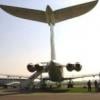
August 25, 201213 yr Author The double engine failure I highlighted at the start though is a little more problematic, isn't it. In as much as you don't know "what" kind of fire is occuring. The arguments go both ways on this and it also depends on what a/c type you are flying. Some a/c are fitted with fire bell inhibitors. In which case hopefully it is only a bird (or late passenger) strike and your fire actions once airborne contain the situation. But thereafter, depending on a/c type backup systems, a double engine failure can also cause an alarming degredation to your on board systems and flight control. If on the other hand the fire is being caused by a subsequent large fuel leak then it's conceivable that you might land back minus one wing so to speak! That certainly did happen to a Nimrod and of course to Concorde. also that probably could have been the outcome of the BA Airtours accident at Manchester. He stopped though but parked the a/c sadly the wrong way round as probably everyone would have otherwise escaped. If your rwy is limiting then there is little time for decision and that's why one gets airborne. If you know that there is still enough rwy left up to your decision speed then you have the luxury of discussing that during your briefing. Referring again to the a/c at the start of this thread. It has an unusual split system control being it partially fly by wire. With two engines out and the ELRAT deployed one crew member control pitch the other roll on their control columns. (unfortunately it's not possible to model that in FS9/FSX) Super VC10 into LOWI with PF3 at a cinema near you https://www.youtube.com/watch?v=298UDyNmgUA
August 25, 201213 yr Unless a double engine failure on takeoff is something that was not trained for, nor a procedure developed for, nor taken into account in the takeoff data, then it is no more critical than any other failure. If it is within the realm of possible failure scenarios for that plane, then there is no reason to go off the reservation and do things like abort after rotation as you seem to advocate. If what you are driving at is a multiple failure event where you are losing engines, getting hit by lightning, getting hit by Canadien Geese, running out of gas, cargo is loose and shifting, tires are blowing, tower cleared for takeoff another plane crossing your path, wife announces she is divorcing you, and God says He hates you, all while you are between V1-Vr, then yeah, I would agree that that is a particular scenario which you have probably not been trained for, that there is probably no developed procedure for and that these extenuating circumstances would justify doing something off the reservation. Otherwise, no.
August 25, 201213 yr Author Actually I have never "advocated" as you put it stopping at or after Vr. My intention was to highlight that In some cases where the rwys "outstrip" the a/c performance and the a/c performance itself is such that Vr is rapidly achieved , it is technically possible to stop. However receiving a call from the wife between V1 and Vr announcing her desire to divorce is a definate GO! Super VC10 into LOWI with PF3 at a cinema near you https://www.youtube.com/watch?v=298UDyNmgUA


Create an account or sign in to comment