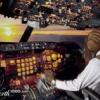
January 25, 200719 yr Not been here in awhile, thought I'd share a cool story. (been with C-17 for over 20yrs) By Debby ArkellBoeing C-17 Globemaster IIIs are known for their ability to perform flawlessly even in the most austere conditions. However, a U.S. Air Force C-17 was put to the ultimate test in late December when it performed the first-ever airdrop by a C-17 over the South Pole -- one of the most inhospitable locations on Earth. Two Boeing employees were among those who were instrumental in ensuring the C-17 successfully completed its mission -- a mission that also had unexpected beneficial results for the C-17 program.Boeing C-17 Test Pilot Doug Soho and 777 Empennage Inspector Alex Peterson are U.S. Air Force reservists based out of McChord Air Force Base in Washington state, and were among the 11 reservists and 26 active-duty personnel comprising the C-17 contingent of Operation Deep Freeze."Operation Deep Freeze is the name of the aerial supply and movement of cargo, mail, and passengers in and around the Antarctic continent supporting the National Science Foundation and the U.S. Antarctica Program," said Peterson, a master sergeant working as loadmaster on the mission. The Joint Task Force-Support Forces Antarctica team has supported the NSF with re-supply missions since the mid-1950s. Aircrews typically use ski-equipped C-130s to shuttle supplies between Christchurch, New Zealand and McMurdo Station, Antarctica, ultimately delivering goods to South Pole camps, but Peterson said last season the idea arose to conduct the airdrop with a C-17. Though a C-130 has the advantage of being able to land on snow, a C-17 can deliver up to four times as much cargo in a single mission. The first C-17 airdrop over the South Pole -- and the first ever using the "heavy equipment airdrop method" there -- meant that validating the C-17's capability to perform in harsh conditions was crucial, requiring extensive contingency planning.Maj. Soho acted as the mission's instructor pilot and was responsible for the majority of the preflight planning. Extreme cold, with temperatures of minus 20 degrees Fahrenheit (minus 29 degrees Celsius) or below at ground level, and navigational issues posed unique challenges."Flying to the South Pole is anything but a typical mission for a C-17 and its crew," said Soho. "Fuel is susceptible to freezing, so it's standard procedure on Antarctic flights to use additives to prevent that. However, we also had to consider the effect of temperature on hydraulic systems, oil and potable water." Take hydraulic systems, for example. When the C-17 is on the ground, the hydraulics cycle and create a continuous flow of fluid; but when the aircraft is in flight and fluids move to the 'extremities' of the aircraft, the extremely low temperatures could lead to malfunctions and system failures, including loss of flap functionality. "If that happened on a C-130, the aircraft could land on snow if necessary," Soho said. "However, a C-17 can't land on snow, and at the South Pole we're 700 miles (1,126 km) away from our nearest landing point at McMurdo. We needed to have contingency plans in case we had to fly that distance with the flaps out."Other temperature-related factors to consider prior to takeoff included planning fuel requirements in case the 70,000-pound (31,750 kg) load didn't leave the aircraft, and planning supplemental oxygen requirements for the crew in case freezing hydraulics prevented the doors from closing. "My job at Boeing really helped with preflight planning because I was able to consult with some of my performance engineering colleagues in Long Beach [Calif.] on weight and thrust issues," Soho said. "With their help, we were able to maximize our load and still have enough fuel and oxygen to return safely should a problem arise."Navigation issues also posed a challenge during the historic mission. The Earth's magnetic poles render compasses useless, and Peterson noted that the traditional grid method of navigation can be confusing at best. And while the C-17 is equipped with an onboard computer navigation system that uses complex algorithms to determine the aircraft's location, as the crew ran preparatory tests prior to the mission they saw a number of anomalies in the navigational data due to the aircraft's proximity to the geographic pole.The anomalies arising from Operation Deep Freeze proved to be a golden opportunity. Soho contacted his Boeing colleague Mike Cabot, an avionics engineer from Long Beach, who came to Christchurch with monitoring equipment. Together they captured the navigational anomalies and fed the data into Cabot's equipment. Cabot and his colleagues now can begin addressing the changes required to support future missions to Antarctica and develop future C-17 landing capabilities to be used at the South Pole by 2009."This was very significant for Boeing and is a great, unexpected success story from this mission," Soho said. "Active and reserve forces worked together with Boeing, providing a very real opportunity to improve the airplane's navigation systems."The crew ultimately decided to fly the mission using visual flight rules. Flying at an altitude of 1,250 feet (381 meters) above the 9,500-foot-high terrain (2,896 meters), on Dec. 20 they successfully dropped their huge load of supplies at the South Pole research camps.Soho and Peterson have since returned from their reservist duties and are now back on the job at Boeing -- Soho in Long Beach and Peterson in Frederickson, Wash. "We're all incredibly proud to have been a part of this significant aviation milestone," Peterson said. "Boeing and reservists really worked together on this mission. It's a true partnership."I don't have FSX yet, was thinking doing proper Airdrops would be kinda cool....if done right. Weight shift, fuel burn, all that stuff...
January 26, 200719 yr Author Why would the hydraulics freeze when they are operating at temperatures 30 degrees Celsius above what the temperature would be at normal cuising altitudes? I would think it would be more of a feat if it was done in the middle of winter instead of summer. Chris Miller
January 26, 200719 yr Very cool stuff, thanks for sharing. Are those your photos by the way? I'm on the E-3 myself. About the airdrops, the military flies more than civilian airliners and all of us (aircrew) would like to recreate real world missions in our favorite flight simulators, I myself have been waiting for a detailed C-17 or C-5 or even a tanker or something, we have a pretty good C-130 from captainsim. Military aviation (though it should be, especially since they do the most skillful type flying, like AR, touch and go's, and various transition work) isn't too popular around here unfortunately, but like you I'm enthusiastic about what can be done in the sim. FSX is quite good, some people have some performance issues, but it's really quite advanced. Among some of the enhancements are; much improved flight dynamics, much improved mesh and ground textures also some cool extras are birds, a round earth, and the ability to display wet runways and various other graphical improvements. Now speaking specifically of military aircraft, I know an E-3 pilot who is a computer programmer as well, you should really see his XML gauges for the E-3 in FS2004, if your interested, please email me, I will ask him for some screenshots, his work is easily equivalent to any of the payware programmers, but he doesn't really know that this is a huge hobby and uses his work for training only so far. I am very excited about the future of FS, this hobby just keeps growing and growing and AVSIM is at the forefront of this amazing hobby, I would stay tuned to see what comes next.Jeff Jeff Commercial | Instrument | Multi-Engine Land AMD 5600X, RTX3070, 32MB RAM, 2TB SSD
January 26, 200719 yr Thanks for the report.I have been begging PMDG etc.... to make a decent sim of this aircraft but to no avail?I was in awe, the first time I saw the prototype display at R.A.F. Mildenhall in Suffolk and have prayed for one ever since. Dave Taylor
January 26, 200719 yr It could not be done in winter due to the absence of light for several months.Our 50+ year history in the region has proven that some thing simply cannot be done at night without unacceptable risks.I've talked with several Navy C-130 crews who made the flights to McMurdo and the South Pole over the years.They really, really want the sun as the ultimate navigational aid. The only navaid not adversely impacted by the region. In winter they could use the stars? Does the C-17 even have a capacity to use a sextant like the C-130?I believe the hydraulics freeze they were most concerned about was inside the aircraft when the doors were opened. But there have been cases of inflight freezing of hydraulics and fuel lines on missions in that region.
January 27, 200719 yr Author I have a friend that is a Sonic C-17 pilot I'll try to ask him about what he's heard about the mission. Don't they have some sort of TAWS so they don't need to have light? Chris Miller
January 28, 200719 yr Wasn't a drop made in winter when the station's doctor had a breast tumor? Chemotherapy drugs etc...Best Regards, Donny:-wave FLYing? It's cool. Trillions of birds and insects can't be wrong.
January 28, 200719 yr Light is also for the guys on the ground.I remember it was in the 80's when they had to make a night drop from a C-130 to McMurdo. Had to drop the same cargo four times - four different missions - before the folks on the ground could find it.The three most hostile environments where man has ever tried to live are (1) space; (2) deep underwater; (3) Antarctica.Stuff which normally works elsewhere and in testing doesn't work there.
January 31, 200719 yr Lots of misinformation in this thread.The USAF ran midwinter airdrops in the C-141B with crews deployed from Norton AFB to Christchurch NZ in the late 1980s and early 1990s. During the Antarctic summer, the Deep Freeze missions landed on the ice...in the winter airdrop was the only option. And that was in the days before GPS...we used dual INS systems operating in grid mode and navigators with sextants. Required a double air refueling to get there and back, too.The C-17, with GPS-coupled triple INS doesn't need navs or sextants to get the job done safely. And we airdrop things in the dark all the time.In Oct 1999 Dr. Jerri Nielsen was rescued from Scott-Amundsen station at the pole by an LC-130 that landed at the station in extreme cold and high winds. In April 2001, Dr Ron Shemenski was rescued in a similar operation by a DHC-6 Twin Otter that landed at the pole after several attempts thwarted by bad wx.RegardsBob ScottATP IMEL Gulfstream II-III-IV-VSantiago de Chile Bob Scott | President and CEO, AVSIM Inc ATP Gulfstream II-III-IV-V Sys1 (MSFS20+24/XPlane12+11): AMD 9800X3D, water 2x240mm, MSI MPG X670E Carbon, 64GB GSkill 6000/30, nVidia RTX4090FE Alienware AW3821DW 38" 21:9 GSync, 2x4TB Crucial T705 PCIe5 + 2x2TB Samsung 990 SSD, EVGA 1000P2 PSU, 12.9" iPad Pro Thrustmaster TCA Boeing Yoke, TCA Airbus Sidestick, Twin TCA Airbus Throttle quads, PFC Cirrus Pedals, Coolermaster HAF932 case Sys2 (P3Dv5/v4): i9-13900KS, water 2x360mm, ASUS Z790 Hero, 32GB GSkill 7800MHz CAS36, ASUS RTX4090 Samsung 55" JS8500 4K TV@60Hz, 3x 2TB WD SN850X 1x 4TB Crucial P3 M.2 NVME SSD, EVGA 1600T2 PSU Fiber link to Yamaha RX-V467 Home Theater Receiver, Polk/Klipsch 6" bookshelf speakers, Polk 12" subwoofer, 12.9" iPad Pro PFC yoke/throttle quad/pedals with custom Hall sensor retrofit, Thermaltake View 71 case, Stream Deck XL button box Sys3 (DCS/P3Dv4/ATS/ETS): AMD 7800X3D, MSI MPG X870E Carbon, Noctua NH-D15S, 64GB GSkill 6000/30, EVGA RTX3090 Alienware AW3420DW 34" 21:9 GSync, Corsair HX1000i PSU, 4TB Crucial T705 PCIe5 + 2TB Samsung 970Evo Plus, TM TCA Officer Pack, Saitek combat pedals, TM Warthog, TM RS300 FF wheel/pedals, Coolermaster HAF XB case


Create an account or sign in to comment